
The Algae Bloom That Changed Everything
For years, I chased the perfect aquarium. I read every article, watched countless videos, and bought all the latest gadgets. I thought I was doing everything right. I tested my water religiously, meticulously dosed fertilizers, and performed regular water changes. Yet, something was always off. Algae blooms plagued my tanks, my plants struggled, and my fish seemed…stressed. It was a constant battle, a never-ending cycle of problems and solutions that never quite solved anything. I was spending more time fixing things than actually enjoying my aquariums.
Then came the Great Green Water Incident of 2020. My prized 75-gallon tank, the one I had painstakingly aquascaped and stocked with rare tetras, turned pea-soup green overnight. Panic set in. I frantically researched solutions, tried every chemical treatment imaginable, and even considered tearing the whole thing down and starting over. Nothing worked. The algae persisted, a murky, suffocating cloud that obscured everything. I was defeated.
But in that moment of despair, a strange thing happened. I started to question everything I thought I knew. All the “expert” advice, all the complex routines, all the expensive products – none of it had worked. Maybe, just maybe, I was overcomplicating things. Maybe the key to a healthy aquarium wasn’t about chasing perfection, but about finding a simpler, more sustainable approach.
My Journey to Simplicity: A New Routine Emerges
That algae bloom became the catalyst for a complete overhaul of my aquarium maintenance routine. I decided to strip everything back to basics and focus on creating a more balanced ecosystem. It wasn’t an overnight transformation, but gradually, I developed a routine that not only eliminated the algae but also created a thriving environment for my fish and plants. Here’s what I learned and implemented:
1. The Power of Observation: Knowing Your Tank
Before diving into any changes, I spent a week simply observing my tank. Really observing it. I watched how the fish behaved, how the plants grew, and how the light interacted with the aquascape. I noted any subtle changes in water clarity, algae growth, or fish activity. This period of observation was crucial. It helped me identify the underlying issues and tailor my approach accordingly.
For example, I noticed that the algae growth was most prolific on the side of the tank that received direct sunlight in the morning. This immediately suggested that excess light was a major contributor. I also observed that my fish seemed more active and colorful after water changes, indicating that the water quality was not optimal between changes.
This process of observation highlighted the importance of understanding your specific tank’s needs. Every aquarium is a unique ecosystem, and what works for one tank may not work for another. Resist the urge to blindly follow generic advice and instead, learn to read the signs your tank is giving you.
2. Light: Less is Often More
As I suspected, excessive light was a major culprit in my algae woes. I had been running my high-powered LED lights for 10-12 hours a day, thinking that more light would promote better plant growth. However, I realized that I was providing more light than my plants could effectively use, leaving the excess energy available for algae to thrive. I implemented a few changes:
- Reduced Photoperiod: I reduced the photoperiod to 6-8 hours per day, using a timer to ensure consistency.
- Dimmed the Lights: I gradually dimmed the intensity of my LED lights, monitoring the plants for signs of stress.
- Strategic Placement: I strategically positioned my tank away from direct sunlight.
The results were almost immediate. The algae growth slowed significantly, and my plants actually seemed to benefit from the reduced light intensity. They developed richer colors and grew more compact, rather than stretching towards the light. It was a counterintuitive but powerful lesson: sometimes, less is more.

3. Water Changes: The Foundation of a Healthy Tank
I had always performed regular water changes, but I realized that I wasn’t doing them frequently enough, or in large enough volumes. I had been adhering to the common recommendation of 25% water changes every two weeks, but based on my observations, this wasn’t sufficient to maintain optimal water quality in my tank. I adjusted my water change routine to:
- Frequency: 50% water changes every week.
- Method: I used a gravel vacuum to remove debris from the substrate during water changes.
- Temperature Matching: I ensured that the new water was the same temperature as the tank water to avoid shocking the fish.
These more frequent and larger water changes had a dramatic impact on the health of my tank. The water became noticeably clearer, the fish were more active and colorful, and the algae growth was further reduced. I realized that water changes are not just about removing nitrates; they’re about replenishing essential minerals and trace elements that are depleted over time.
4. Feeding: Quality Over Quantity
Overfeeding is a common mistake that contributes to poor water quality and algae growth. I realized that I was giving my fish more food than they could consume in a reasonable amount of time, leaving excess food to decompose and fuel algae blooms. I adjusted my feeding routine to:
- Portion Control: I reduced the amount of food I offered to my fish, feeding them only what they could consume in 2-3 minutes.
- Frequency: I fed my fish once a day, rather than multiple times.
- Food Quality: I switched to a high-quality fish food with a lower protein content.
These changes not only improved water quality but also seemed to benefit my fish’s health. They became more active and energetic, and their colors became more vibrant. I also noticed a reduction in bloating and other digestive issues.
5. The Right Tools for the Job: Essential Equipment
While I simplified my overall routine, I did invest in a few key pieces of equipment that made my life easier and helped me maintain a healthy tank:
- Reliable Filter: A high-quality filter is essential for removing debris and maintaining water clarity. I upgraded to a canister filter with a larger media capacity.
- Gravel Vacuum: A gravel vacuum makes it easy to remove debris from the substrate during water changes.
- Timer: A timer ensures consistent light cycles, which is crucial for plant growth and algae control.
These were investments that paid off in the long run. They made my maintenance routine more efficient and helped me create a more stable and balanced environment for my fish and plants.
Beneficial Bacteria: The Unsung Heroes
One of the most important things I learned was the crucial role that beneficial bacteria play in a healthy aquarium ecosystem. These microscopic organisms are responsible for breaking down waste products and converting them into less harmful substances. Without a healthy colony of beneficial bacteria, your tank can quickly become toxic.
Establishing a Healthy Bacteria Colony
I focused on creating an environment that would promote the growth of beneficial bacteria. This involved:
- Avoiding Over-Cleaning: I avoided excessively cleaning my filter media or substrate, as this can remove beneficial bacteria.
- Using Biological Filtration: I incorporated biological filtration media into my filter, such as ceramic rings or bio-balls, to provide a surface area for bacteria to colonize.
- Adding Bacteria Supplements: I occasionally added bacteria supplements to my tank, especially after water changes or when introducing new fish.
Maintaining a healthy bacteria colony is an ongoing process. It requires a delicate balance of nutrients, oxygen, and pH. But the rewards are well worth the effort. A thriving bacteria colony is the foundation of a healthy and stable aquarium ecosystem.

The Zen of Aquascaping: Finding Balance in Design
Aquascaping is more than just arranging rocks and plants. It’s about creating a balanced and harmonious environment that promotes the well-being of your fish and plants. I learned to approach aquascaping with a minimalist mindset, focusing on creating a natural and uncluttered layout.
Simple Principles, Powerful Results
I followed a few simple principles when aquascaping my tanks:
- The Rule of Thirds: I used the rule of thirds to create visually appealing compositions.
- Negative Space: I incorporated negative space to create a sense of depth and openness.
- Natural Materials: I used natural materials, such as rocks, driftwood, and sand, to create a realistic environment.
I also made sure to choose plants that were appropriate for my tank’s size and lighting conditions. I avoided overcrowding the tank with too many plants, as this can restrict water flow and create dead zones.
The goal was to create an aquascape that was both aesthetically pleasing and functional. A well-designed aquascape can provide hiding places for fish, promote water circulation, and create a sense of balance and harmony within the tank.
Patience and Persistence: The Keys to Success
The biggest lesson I learned throughout this process was the importance of patience and persistence. There were times when I felt like giving up, when the algae would return or the plants would struggle. But I persevered, making small adjustments to my routine and observing the results. It took time, but eventually, I found a system that worked for me.
Aquarium keeping is not a sprint; it’s a marathon. There will be ups and downs, successes and setbacks. The key is to stay patient, keep learning, and never stop experimenting. With time and dedication, you can create a thriving aquarium that brings you joy for years to come.
Beyond the Routine: A Deeper Connection with Nature
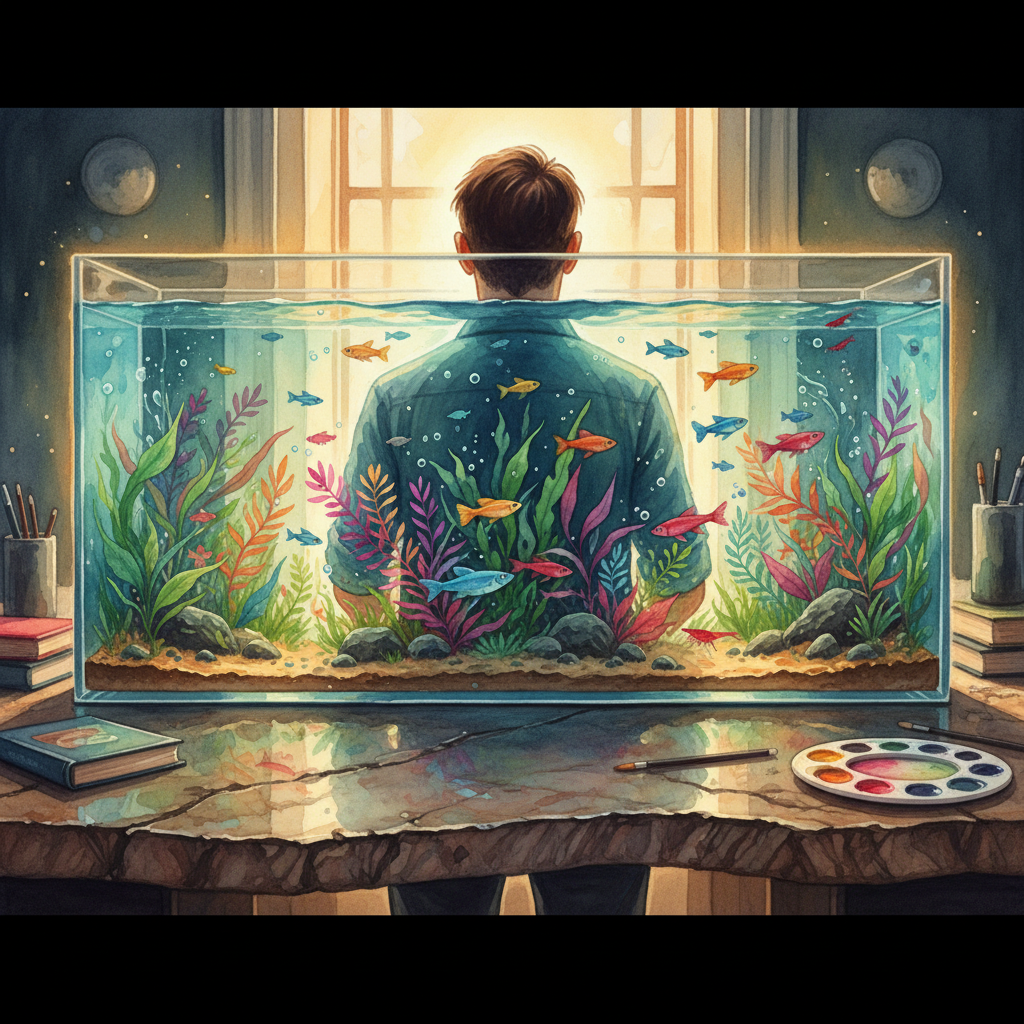
My journey to simplify my aquarium maintenance routine wasn’t just about eliminating algae or growing beautiful plants. It was about developing a deeper connection with nature and understanding the delicate balance of ecosystems. I learned to appreciate the complexity and resilience of the natural world, and I gained a newfound respect for the creatures that share our planet.
Keeping an aquarium is more than just a hobby; it’s an opportunity to learn about biology, chemistry, and ecology. It’s a chance to create a miniature ecosystem in your own home, to observe the intricate relationships between plants, animals, and microorganisms. And it’s a reminder of the beauty and fragility of the natural world.
My Current Routine: Simple, Sustainable, and Enjoyable
After years of experimentation, I’ve finally settled on a routine that is simple, sustainable, and enjoyable. Here’s a summary of my current maintenance schedule:
- Daily: Observe the tank, feed the fish sparingly.
- Weekly: 50% water change with gravel vacuuming.
- Monthly: Clean the filter media (sparingly, rinsing in used tank water).
- As Needed: Trim plants, adjust lighting, monitor water parameters.
This routine takes me less than an hour a week to complete, and it keeps my tanks healthy and thriving. I no longer spend hours battling algae or struggling to maintain water quality. Instead, I can relax and enjoy the beauty of my aquariums.
The key is to find a routine that works for you and your specific tank. Don’t be afraid to experiment, to make adjustments, and to learn from your mistakes. With time and dedication, you can create an aquarium that is both beautiful and sustainable.

So, if you’re struggling with aquarium issues, take a step back and consider simplifying your approach. Focus on the basics: observation, light, water changes, feeding, and beneficial bacteria. Don’t chase perfection; strive for balance. And most importantly, enjoy the journey. Because in the end, aquarium keeping is about more than just fish and plants; it’s about connecting with nature and creating a little piece of paradise in your own home. It’s about finding the joy in the simple act of creating and maintaining a balanced ecosystem, a miniature world where life thrives under your care. And believe me, that feeling is worth all the effort.
My name is Daniel Carter, I am 35 years old, and I live in the United States. I have been passionate about aquariums for many years, and what started as a simple hobby quickly became a lifelong interest in aquatic life, fish behavior, and responsible tank care.
Through TheBrightLance, I share real experiences, practical knowledge, and honest lessons learned from maintaining different types of aquariums. I enjoy testing equipment, studying fish behavior, improving maintenance routines, and helping beginners avoid common mistakes.
My goal is to make aquarism easier, more ethical, and more enjoyable for everyone — whether you are setting up your very first tank or looking to refine your techniques.