
Before I make a single adjustment, I have a very specific, non-negotiable sequence of events that I must perform. I arrange my floating tool panels so they sit perfectly on the right side of my screen. I check my color profiles to ensure my monitor is calibrated. I turn on my digital grid lines, and I set my snap-to-guides.
I am essentially building a controlled, predictable environment.
If I skip this setup phase and just dive straight into the editing, my workflow becomes chaotic. I lose track of my layers, my colors feel unbalanced, and I feel a lingering sense of anxiety the entire time I am working. I need that preparatory sequence to transition my brain from “resting” to “creating.”
A few years ago, I realized that my morning coffee operates on this exact same psychological principle.
For millions of people around the world, coffee is not just a beverage. It is not just a delivery mechanism for caffeine. It is the human equivalent of calibrating the monitor and setting the digital grid lines before the chaos of the workday begins.
Here is the honest, deeply psychological story of what makes coffee a daily ritual for so many people, the profound difference between a habit and a ceremony, and how a simple roasted seed became the ultimate anchor for the modern human mind.
The Crucial Difference Between a Habit and a Ritual
To understand the global obsession with the morning coffee routine, we first have to establish the difference between a habit and a ritual.
A habit is a sequence of actions that your brain performs on autopilot to save energy. Tying your shoes is a habit. Brushing your teeth is a habit. Driving the exact same route to the grocery store is a habit. You do not think about these actions; you simply execute them while your mind wanders somewhere else.
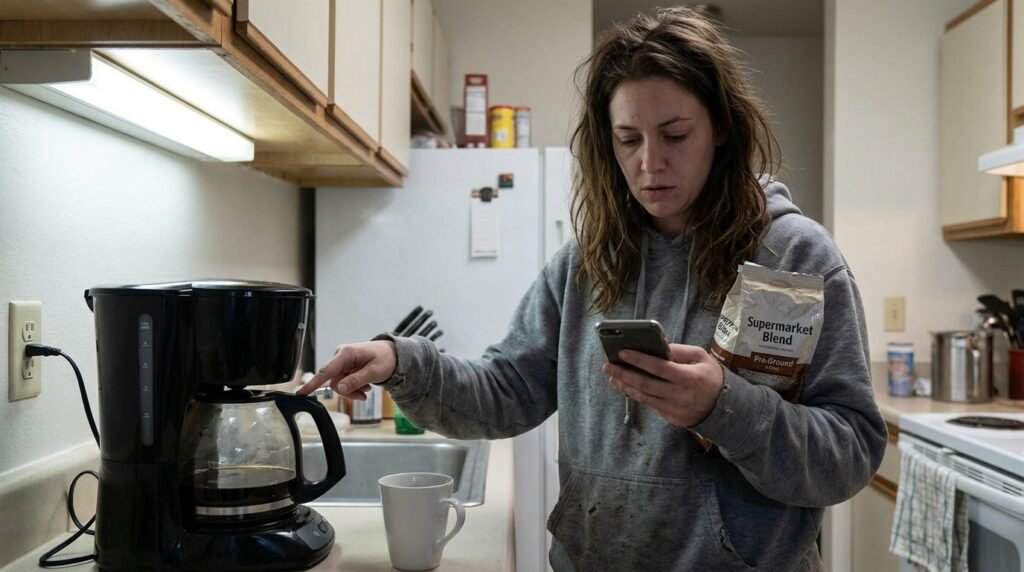
For a long time, my relationship with coffee was nothing more than a blind habit.
I would stumble into my kitchen, dump a scoop of cheap, pre-ground supermarket coffee into a plastic machine, press a button, and stare at my phone. I didn’t care about the process. I just wanted the bitter liquid to wake me up.
A ritual, on the other hand, requires absolute presence.
A ritual demands that you pay attention to the physical actions you are performing. It has a beginning, a middle, and an end, and it is infused with a sense of deliberate intention.
When I threw away my automatic drip machine and bought a manual burr grinder, a digital scale, and a gooseneck kettle, the autopilot completely switched off. The process was no longer automatic. I had to pay attention.
Understanding this transition from mindless consumption to deliberate action is exactly (How Coffee Became Part of My Lifestyle Without Me Realizing). It crept into my life as a hobby, but it quickly cemented itself as a psychological necessity.
The Illusion of Total Control
We live in a world where we control very little of our daily environment.
When you wake up and look at your smartphone, you are immediately bombarded with demands. You have unread emails from frustrated clients. You have news alerts about global crises. You have traffic jams waiting for you on the highway.
Your entire day is often dictated by the chaotic, unpredictable actions of other people.
But for fifteen quiet minutes in the morning, standing in front of my kitchen counter, I have absolute, uncompromised control over my universe.
I decide exactly how many grams of coffee beans to use. I decide the exact temperature of the water. I dictate the speed of the pour, the physical agitation of the coffee bed, and the final volume of the liquid in my mug.
The digital scale does not argue with me. The gooseneck kettle does not send me an urgent email. The coffee beans simply respond to the laws of physics and chemistry that I am manually applying to them.
This creates a massive psychological relief. Starting your day with a micro-victory—successfully executing a small, highly controlled task perfectly from start to finish—sets an incredibly positive tone for the rest of the day. It provides a foundation of order before the unavoidable chaos begins.
The Sensory Anchor
Beyond the illusion of control, the coffee ritual is incredibly powerful because it is a full-body, sensory experience.
In my profession, my work is entirely digital and intangible. I move invisible files from one folder to another. I manipulate pixels on a flat, glass screen. At the end of a ten-hour workday, my hands are clean, and I haven’t physically built anything in the real world.
The modern human brain becomes deeply fatigued by this lack of physical, tactile feedback.
The coffee ritual forces you back into the physical world. It engages every single one of your five senses simultaneously.
You hear the mechanical, satisfying crunch of the steel burrs breaking the dense, roasted beans apart. You feel the heavy, comforting weight of the stainless steel kettle in your hand. You watch the dark, ruby-red liquid slowly drip through the white paper filter.
Most importantly, you smell the explosive, complex aromatics that fill the kitchen the exact second the hot water hits the dry grounds.
This sensory overload is deeply grounding. Refining these physical, analog steps is the true essence of (What I Do Differently Now When Making Coffee). I stopped rushing the physical steps and started treating them as an immersive, tactile escape from the digital world.

The Boundary Line of the Day
In the era of remote work and constant connectivity, the boundaries between our personal lives and our professional lives have been completely erased.
Your office is often in your living room. Your boss can message you on your personal phone at nine o’clock at night. There is no clear line that separates “resting time” from “working time.”
The daily coffee ritual acts as a desperately needed physical boundary line.
When I wake up, I refuse to open my laptop or check my professional inbox until my coffee is completely finished. The time spent grinding, pouring, and drinking the coffee belongs entirely to me. It is a sacred buffer zone.
If I skip the ritual and just rush straight to my computer, the entire day feels frantic. I feel like I am constantly trying to catch my breath. But when I respect the boundary line, I enter the workday feeling calm, centered, and prepared. The coffee acts as the threshold I cross to officially start the day on my own terms.
Permission to Do Nothing
There is a strange, pervasive guilt in modern society associated with “doing nothing.”
If you just sit in a chair and stare out the window for ten minutes, people will assume something is wrong with you. You will feel guilty for not being productive, not reading a book, or not checking your phone. We are conditioned to believe that every single second must be optimized.
But if you hold a warm ceramic mug in your hand, everything changes.
You are no longer “doing nothing.” You are “having coffee.”
The beverage provides a socially acceptable shield against productivity. It gives you permission to pause. You can sit on your balcony, watch the cars drive by, and let your mind wander completely aimlessly for fifteen minutes, and society accepts it as a valid activity.
This psychological permission slip is one of the greatest hidden benefits of the ritual. It forces a wedge of pure, unadulterated free time into an otherwise packed schedule.
A Connection to the Global Tapestry
As my ritual became more ingrained, I started paying more attention to the specific beans I was brewing.
I stopped buying generic blends and started buying single-origin coffees from specific farms in Colombia, Ethiopia, and Guatemala. When you hold a bag of specialty coffee, you are holding the final result of a staggering global effort.
You realize that a farmer had to hand-pick the cherries on a steep mountainside. Workers had to wash and dry the seeds under the sun. A roaster in your city had to carefully apply heat to unlock the flavors.
When you stand in your kitchen and carefully pour water over those grounds, you are participating in the final step of that epic agricultural journey.
Acknowledging this massive chain of human labor perfectly illustrates (Why Coffee Means More Than Just Caffeine to Me). It is no longer just a dark liquid; it is a quiet, daily connection to a vast, invisible community of farmers, roasters, and baristas all over the world.

The Reward of Patience
We live in an age of instant gratification. If a website takes more than three seconds to load, we get frustrated and close the tab. We want our food delivered instantly, and we want our entertainment on demand.
The manual coffee ritual is one of the last remaining activities that absolutely refuses to be rushed.
If you try to pour the water too fast, the coffee will channel, and your mug will taste violently sour. If you try to grind the beans too quickly, the friction will burn the coffee.
The ritual demands patience. It teaches you that some things simply require a specific amount of time to reach their full potential. You cannot cheat gravity, and you cannot cheat thermal extraction.
When you finally finish the process, and you take a sip of an impossibly clean, sweet, complex cup of coffee that you crafted with your own hands, the reward is deeply satisfying. You didn’t just buy a product; you engineered an experience.
Calibrating Your Own Mind
If you are currently treating your mornings like an emergency—if you wake up, slam a cup of instant coffee, and immediately dive into the stress of your inbox—I highly encourage you to hit the reset button.
You are starting your editing process without setting up your workspace. You are working in chaos.
You do not need to spend hundreds of dollars on fancy equipment to start a ritual. You just need to change your intention. Buy a bag of whole beans from a local roaster. Buy an inexpensive French Press or a plastic pour-over cone.
Force yourself to slow down. Listen to the sound of the water boiling. Smell the dry grounds before you brew them. Watch the steam rise from the mug.
When you stop treating coffee as a utilitarian drug and start treating it as a deliberate, mindful ritual, you will completely transform your mornings. You will finally give yourself the quiet, analog calibration you need to face whatever digital chaos the rest of the day has in store for you.

My name is Daniel Carter, I am 35 years old, and I live in the United States. I have been passionate about aquariums for many years, and what started as a simple hobby quickly became a lifelong interest in aquatic life, fish behavior, and responsible tank care.
Through TheBrightLance, I share real experiences, practical knowledge, and honest lessons learned from maintaining different types of aquariums. I enjoy testing equipment, studying fish behavior, improving maintenance routines, and helping beginners avoid common mistakes.
My goal is to make aquarism easier, more ethical, and more enjoyable for everyone — whether you are setting up your very first tank or looking to refine your techniques.