
The Murky Depths of Early Mistakes: My Aquarium Odyssey
Confession time: my first foray into the world of aquariums was, to put it mildly, a disaster. I envisioned a serene underwater paradise, a miniature ecosystem thriving in my living room. What I got was… well, let’s just say it involved a lot of frantic water changes, stressed-out fish, and a constant battle against algae. It was a learning experience, albeit a rather painful one. But, I’m Lucas Anderson, and I’m here to tell you that you don’t have to repeat my mistakes. You can learn from them, and I’m going to share some hard-won wisdom with you. I’ve been keeping freshwater aquariums for over a decade now, and while I still learn new things every day, I’ve definitely navigated the treacherous waters (pun intended!) of beginner aquarism.
The truth is, setting up an aquarium is a lot like learning to ride a bike. You’re going to fall, scrape your knees, and maybe even question your sanity. But once you get the hang of it, it’s an incredibly rewarding experience. The key is to learn from your mistakes and not give up. So, let’s dive in (another pun intended!) and explore some of the most common pitfalls that plague beginner aquarists, and how you can avoid them.
The Unforgiving Cycle: Neglecting the Nitrogen Cycle
If there’s one thing I wish I had understood from the get-go, it’s the nitrogen cycle. It’s the foundation of a healthy aquarium, and neglecting it is a surefire recipe for disaster. Imagine a tiny, invisible army of beneficial bacteria working tirelessly to keep your tank clean and safe. These bacteria convert harmful ammonia (produced by fish waste and decaying food) into less toxic nitrites, and then into even less toxic nitrates. Nitrates are then removed through water changes.
The problem is, this cycle doesn’t just magically appear. It needs to be established, and that takes time and patience. When you first set up your aquarium, there aren’t any of these beneficial bacteria present. So, when you add fish, they start producing ammonia, which quickly builds up to toxic levels. This is often referred to as “New Tank Syndrome,” and it’s a major killer of new fish.
How I Learned the Hard Way
I remember my first aquarium vividly. I was so excited to get started that I completely skipped the cycling process. I filled the tank with water, added a few decorations, and immediately went to the pet store to buy some fish. Within a few days, my fish were gasping at the surface, their fins clamped to their bodies. I didn’t understand what was happening. I was changing the water regularly, but it wasn’t enough. The ammonia levels were through the roof. I lost almost all of my fish in a matter of weeks. It was heartbreaking, and it taught me a valuable lesson: cycling is non-negotiable.
Cycling Done Right: Patience is Key
So, how do you cycle an aquarium properly? There are a few different methods, but the most common is the fishless cycling method. This involves adding a source of ammonia to the tank to feed the beneficial bacteria. You can use pure ammonia (available at most hardware stores), or you can use fish food. The key is to monitor the ammonia, nitrite, and nitrate levels regularly using a test kit. Once the ammonia and nitrite levels consistently read zero, and you have a measurable nitrate reading, your tank is cycled and ready for fish. It typically takes 4-8 weeks to fully cycle an aquarium, so be patient. Trust me, it’s worth the wait.
I now use a product called Seachem Stability when setting up new tanks or after major water changes. It introduces beneficial bacteria right away and helps to jumpstart the cycling process. It’s not a magic bullet, but it definitely helps speed things up. I also make sure to add a small amount of fish food every day during the cycling process to provide a constant source of ammonia for the bacteria to feed on.

Overcrowding Catastrophe: Less is More
Another mistake I made early on was overcrowding my aquarium. I figured, the more fish, the merrier, right? Wrong. Overcrowding is a major stressor for fish, and it can lead to a whole host of problems, including increased disease susceptibility, stunted growth, and poor water quality. Think of it like living in a tiny apartment with too many roommates. Everyone’s going to be stressed out, and things are going to get messy quickly.
The general rule of thumb is one inch of fish per gallon of water, but this is just a guideline. It doesn’t take into account the specific needs of different fish species. Some fish need more swimming space than others, and some produce more waste than others. For example, goldfish are notoriously messy fish, and they require a lot more space than, say, neon tetras.
My Overcrowding Blunder
I had a 20-gallon tank, and I crammed it full of fish. I had guppies, tetras, platies, and even a small pleco. It looked great at first, but it didn’t last long. The water quality quickly deteriorated, and my fish started getting sick. I was constantly battling algae blooms, and the fish were always stressed. I eventually realized that I had way too many fish for the size of my tank. I had to rehome some of them, and that was a tough decision, but it was the right thing to do.
Space to Thrive: Choosing the Right Tank Size
When choosing an aquarium, it’s always better to go bigger than you think you need. A larger tank is more stable, and it gives your fish more room to swim and explore. It also makes it easier to maintain good water quality. I now recommend that beginners start with at least a 20-gallon tank. This will give you more room for error, and it will allow you to keep a wider variety of fish.
I’ve learned to be very selective about the fish I add to my tanks. I research their specific needs carefully, and I make sure that I have enough space to accommodate them comfortably. I also consider their compatibility with other fish in the tank. Some fish are aggressive and territorial, and they shouldn’t be kept with more peaceful species. I always prioritize the well-being of my fish over my desire to have a visually stunning aquarium. A healthy and happy fish is a beautiful fish.
The Algae Apocalypse: Imbalance and Overfeeding
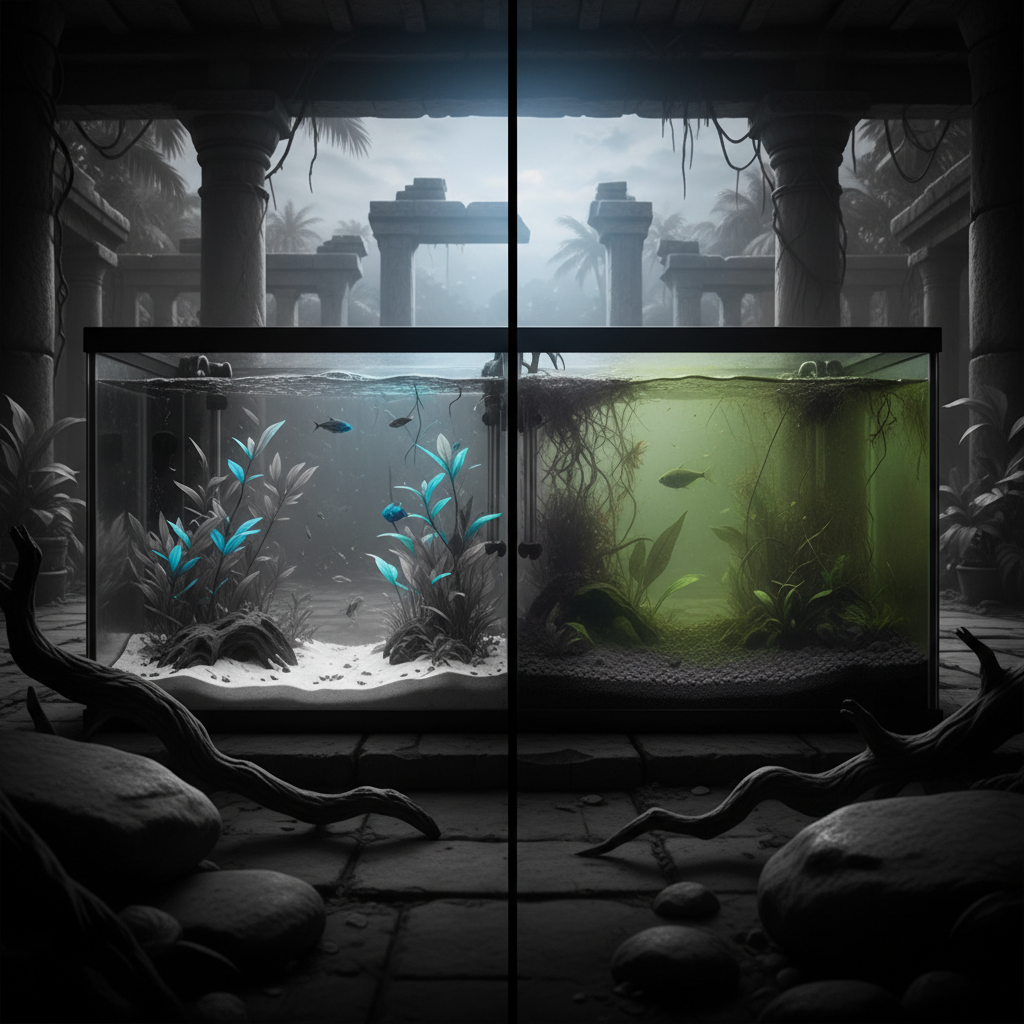
Ah, algae. The bane of every aquarist’s existence. It’s a constant battle, and it can feel like you’re losing the war. But algae isn’t necessarily a bad thing. In small amounts, it can actually be beneficial, providing a food source for some fish and helping to oxygenate the water. The problem is when algae growth gets out of control, turning your aquarium into a green, murky mess.
There are several factors that can contribute to algae blooms, including excessive light, high nutrient levels, and poor water circulation. Overfeeding is a major culprit, as uneaten food decomposes and releases nutrients into the water, fueling algae growth. I used to think that I was being a good fish owner by feeding my fish generously, but I was actually doing them a disservice.
My Green Nightmare
I remember one particular algae bloom that was so bad, I couldn’t even see my fish. The glass was completely covered in green algae, and the water was a pea soup. I tried everything to get rid of it: water changes, algae scrubbers, even chemical treatments. Nothing seemed to work. It was incredibly frustrating. I eventually realized that I was overfeeding my fish. I was giving them way more food than they could eat, and the excess food was just fueling the algae. Once I cut back on the feeding, the algae problem started to improve.
Balancing the Ecosystem: Light, Nutrients, and Feeding
The key to controlling algae is to maintain a balanced ecosystem. This means providing adequate light for your plants (if you have any), but not so much that it fuels algae growth. It also means keeping nutrient levels in check by performing regular water changes and avoiding overfeeding. I now feed my fish only what they can eat in a few minutes, and I make sure to remove any uneaten food promptly.
I also use algae-eating fish and invertebrates to help control algae growth. Nerite snails are particularly effective at cleaning algae off of glass and decorations. Otocinclus catfish are also great algae eaters, and they’re relatively peaceful and easy to care for. These little helpers can make a big difference in keeping your aquarium clean and algae-free. I also use a timer for my aquarium lights to ensure they are only on for about 8 hours a day. This helps prevent excessive algae growth.
The Temperature Tango: Ignoring Thermal Needs
Fish are cold-blooded creatures, meaning their body temperature is regulated by the temperature of their environment. Maintaining the correct water temperature is crucial for their health and well-being. Different fish species have different temperature requirements, so it’s important to research the needs of your fish before you bring them home. Ignoring the thermal needs of your fish can lead to stress, disease, and even death.
I live in Orlando, Florida, where the weather can be unpredictable. We can have hot summers and surprisingly cold winters. This means that I need to be extra vigilant about maintaining the correct water temperature in my aquariums. I use aquarium heaters and chillers to regulate the temperature, and I monitor the temperature regularly using a thermometer.
My Temperature Mishap
I once had a tank of tropical fish, and during a cold snap, the power went out. The temperature in the tank plummeted, and my fish started showing signs of stress. They were sluggish and listless, and they weren’t eating. I was worried that I was going to lose them all. I managed to get a generator running and hooked up the aquarium heater. The temperature slowly started to rise, and my fish eventually recovered. But it was a close call. I learned that it’s important to have a backup plan in case of a power outage.
Finding the Sweet Spot: Heaters and Thermometers
Aquarium heaters are essential for maintaining the correct water temperature in most climates. Choose a heater that is appropriately sized for your aquarium. A general rule of thumb is 5 watts per gallon of water. I prefer submersible heaters with adjustable thermostats. These heaters are easy to install and use, and they allow you to precisely control the water temperature.
A reliable thermometer is also essential for monitoring the water temperature. I use both digital and analog thermometers to ensure that I’m getting accurate readings. I check the temperature regularly, especially during periods of extreme weather. Maintaining a stable and appropriate water temperature is one of the most important things you can do to keep your fish healthy and happy. I also recommend investing in a battery-powered air pump in case of a power outage. This will help to oxygenate the water and keep your fish alive until the power is restored.
The Water Change Woes: Neglecting the Basics
Water changes are the cornerstone of aquarium maintenance. They remove accumulated waste products, replenish essential minerals, and help to keep the water clean and healthy. Neglecting water changes is like neglecting to brush your teeth. Eventually, things are going to start to break down. I used to think that water changes were a hassle, and I would put them off as long as possible. But I soon learned that they are essential for the health of my fish.
The frequency and size of water changes will depend on the size of your aquarium, the number of fish you have, and the type of filtration you’re using. A general guideline is to perform a 25% water change every week or two. However, if you have a heavily stocked aquarium or poor filtration, you may need to perform more frequent water changes.
My Water Change Revelation
I remember one time when I neglected water changes for several weeks. I was busy with work and other commitments, and I just didn’t have the time. The water in my aquarium became cloudy and smelly, and my fish started showing signs of stress. They were lethargic and weren’t eating. I finally realized that I had to do something. I performed a large water change, and the fish immediately perked up. It was like they were breathing a sigh of relief. I learned that water changes are not optional. They are an essential part of aquarium maintenance.
The Right Way to Refresh: Tools and Techniques
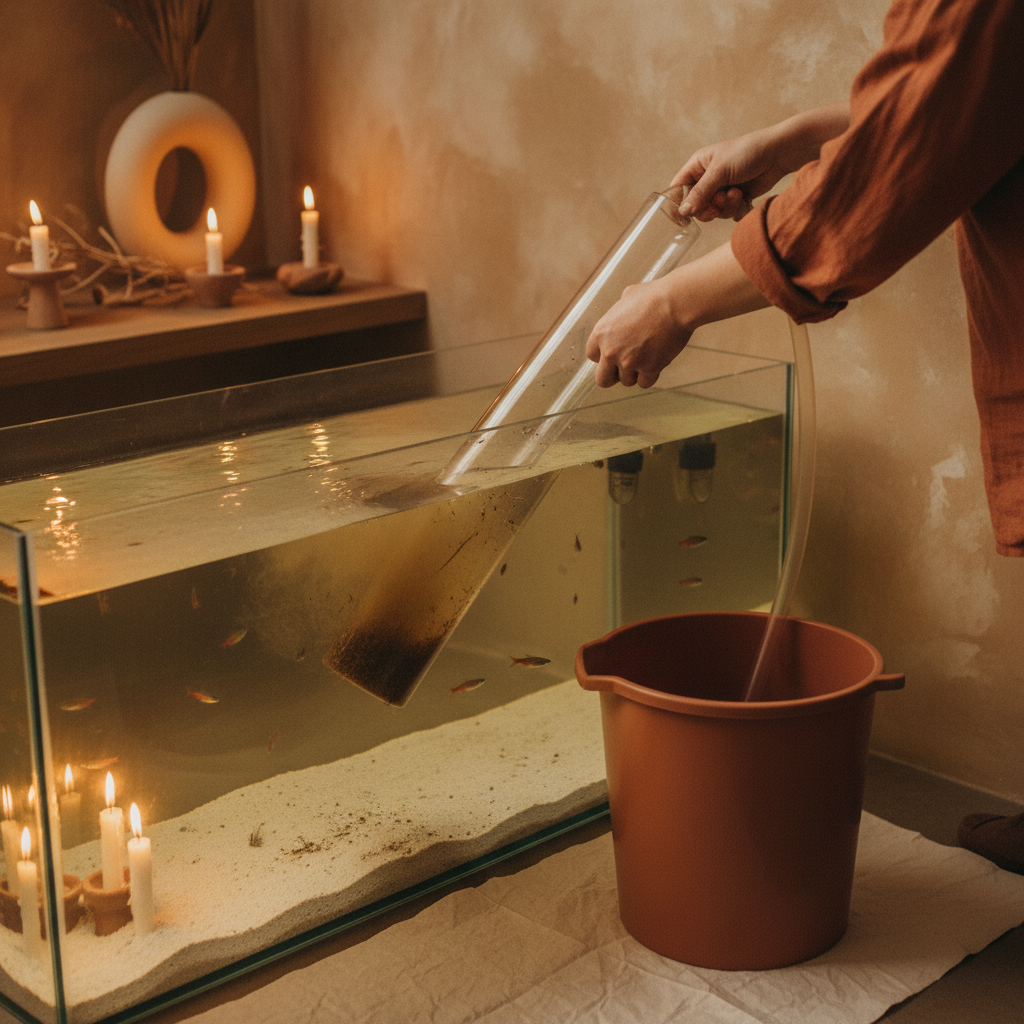
Performing water changes is not difficult, but it’s important to do it correctly. You’ll need a few basic tools, including a siphon, a bucket, and a water conditioner. The siphon is used to remove water from the aquarium and to vacuum the gravel. The bucket is used to transport the water. The water conditioner is used to remove chlorine and chloramine from the tap water, which are harmful to fish.
When performing a water change, it’s important to match the temperature of the new water to the temperature of the aquarium water. This will help to avoid shocking your fish. I use a thermometer to check the temperature of both the old and new water before adding the new water to the tank. I also add the new water slowly, to avoid disrupting the aquarium ecosystem. Regular water changes are the single most important thing you can do to keep your fish healthy and happy. I now look forward to water change day. It’s a chance to interact with my fish and to admire the beauty of my aquarium.
The Filter Fiasco: Neglecting Filtration
Filtration is another essential component of a healthy aquarium. A good filter will remove solid waste, break down harmful chemicals, and help to keep the water clear. There are several different types of aquarium filters available, including hang-on-back filters, canister filters, and sponge filters. The best type of filter for your aquarium will depend on the size of your tank, the number of fish you have, and your personal preferences.
I’ve used all different types of filters over the years, and I’ve found that canister filters are the most effective for larger aquariums. They provide excellent filtration and are relatively easy to maintain. Hang-on-back filters are a good option for smaller aquariums, as they are affordable and easy to install. Sponge filters are a good option for breeding tanks or for tanks with delicate fish, as they provide gentle filtration and won’t suck up small fish or fry.
My Filter Frustration
I once had a canister filter that stopped working properly. I didn’t realize it at first, but the water in my aquarium started to become cloudy, and my fish started showing signs of stress. I eventually realized that the filter was clogged and wasn’t providing adequate filtration. I cleaned the filter, and the water quality quickly improved. I learned that it’s important to maintain your filter regularly to ensure that it’s working properly.
Maintaining Clarity: Cleaning and Replacement
Maintaining your filter is not difficult, but it’s important to do it correctly. You should clean your filter media regularly to remove accumulated waste. The frequency of cleaning will depend on the type of filter you have and the number of fish you have. I clean my canister filter every month or two. I simply remove the filter media and rinse it in a bucket of aquarium water. I never use tap water to clean my filter media, as this can kill the beneficial bacteria that live in the filter.
You should also replace your filter media periodically. The frequency of replacement will depend on the type of filter media you’re using. Carbon filter media should be replaced every month, as it becomes saturated and loses its effectiveness. Other types of filter media, such as bio-balls and ceramic rings, can last for several years. A properly maintained filter is essential for maintaining a healthy aquarium. I now make sure to clean and maintain my filters regularly to ensure that they’re working properly. And I always have spare filter media on hand in case I need to replace it.

The Long Game: Patience and Observation
Ultimately, the most important thing I’ve learned is that keeping an aquarium is a long-term commitment. It requires patience, observation, and a willingness to learn. There will be setbacks and challenges along the way, but the rewards are well worth the effort. There’s nothing quite like the feeling of creating a thriving underwater ecosystem in your own home. And now, years later, I still get immense enjoyment from my aquariums. They are a source of relaxation, inspiration, and endless fascination. So, don’t be afraid to make mistakes. Just learn from them and keep moving forward. The journey is just as rewarding as the destination. And remember, a little bit of knowledge and a whole lot of patience can turn even the murkiest of beginnings into a crystal-clear success.
My name is Daniel Carter, I am 35 years old, and I live in the United States. I have been passionate about aquariums for many years, and what started as a simple hobby quickly became a lifelong interest in aquatic life, fish behavior, and responsible tank care.
Through TheBrightLance, I share real experiences, practical knowledge, and honest lessons learned from maintaining different types of aquariums. I enjoy testing equipment, studying fish behavior, improving maintenance routines, and helping beginners avoid common mistakes.
My goal is to make aquarism easier, more ethical, and more enjoyable for everyone — whether you are setting up your very first tank or looking to refine your techniques.